Rome's Food Scene, By A Local
The Voyage Co.
Rome's Food Scene, By A Local
Thirty-seven years in the same neighbourhood, one very opinionated take on where to eat.
Book a walk with Marco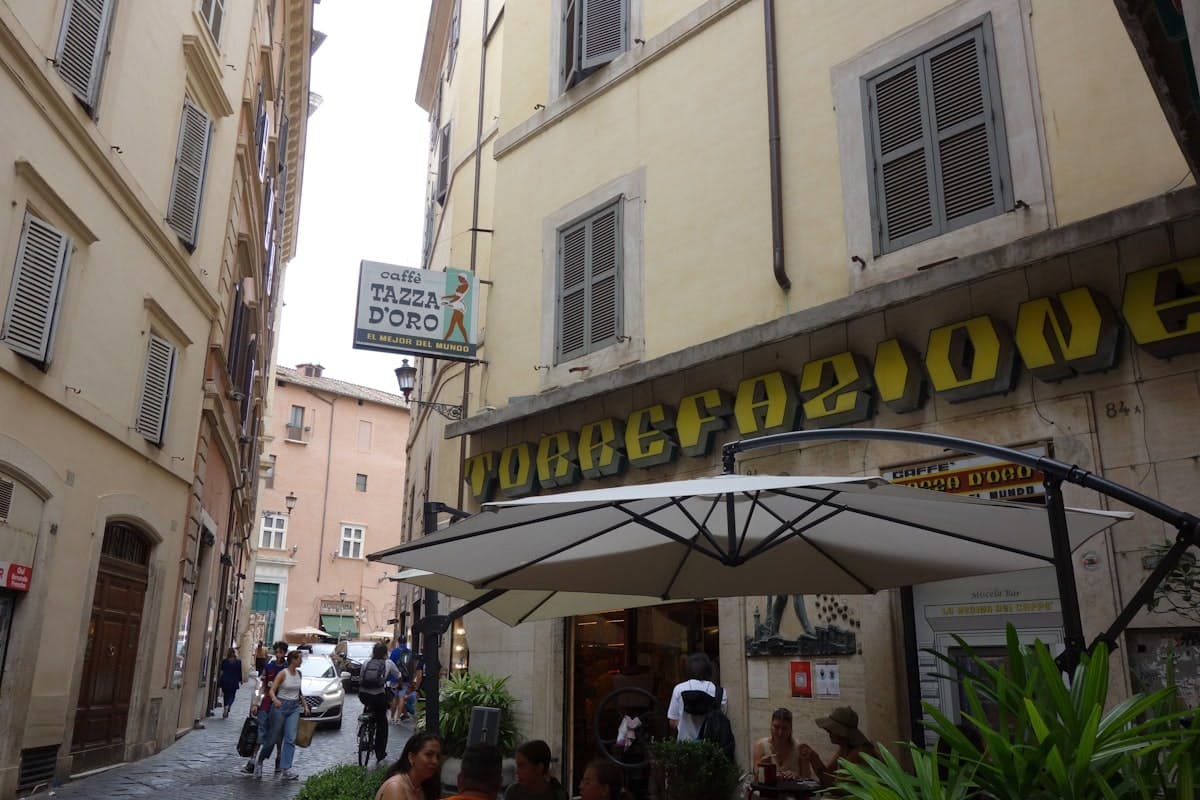
Rome's food is the easiest thing to get wrong. The city runs on muscle memory — a shopkeeper nods you toward the right counter, a waiter pours the house red without asking, lunch stretches to two hours because no one is in a hurry. Drop in for a week and most of that is invisible. You eat next to three other English-speaking tables, pay double, and leave thinking Roman food is fine.
It isn't fine. It's extraordinary — but only if you know where to stand. This is the guide I wish I could hand every friend who visits: the neighbourhoods, the dishes, the timing, and the small cues that get you the better table.
Marco grew up in Testaccio, trained as a line cook at Roscioli, and now runs food walks for travellers who want the market-level version of the city. He is the local behind every recommendation below.
Rome
- Currency
- Euro (€)
- Language
- Italian
- Best months
- April, May, September, October
- Visa
- Schengen rules apply
- Safety
- Low
- Time zone
- CET (UTC+1) / CEST (UTC+2)
Where Romans actually eat
The centro storico is a museum you happen to eat in. Lovely, sure, but the prices track the postcards, not the food. Romans eat in Testaccio, Trastevere's back alleys (not the main piazza), Pigneto after 9pm, and Prati at lunch when the ministries empty out. Each neighbourhood has two or three places that anchor it — and they don't all have a sign out front.
Look for tables pushed together, a menu handwritten in one language, and a pile of cornetti at the bar for regulars who start their day with a standing espresso. If you see a laminated English menu with photos, you are not eating where Romans eat.
The best Roman meal isn't the expensive one. It's the one where the waiter gets slightly annoyed because you asked for cheese on your cacio e pepe.
Neighbourhoods, dishes, and when to show up
Each Roman neighbourhood cooks to a different beat. Testaccio is offal and weekday lunches with ministry workers. Trastevere is long dinners that start at 9pm. Monti is aperitivo-first, food-as-afterthought. Pick the neighbourhood before you pick the restaurant.
The four dishes worth travelling for
Cacio e pepe, carbonara, amatriciana, and coda alla vaccinara. Every trattoria worth its salt can cook all four. Any place that adds cream to a carbonara or serves cacio e pepe with parmigiano — walk out.
The classic four, done right
Before you order, four things worth knowing:
- Water is paid for (still or frizzante) — don't expect tap.
- Bread comes with a cover charge (pane e coperto) at most sit-downs. Normal.
- Coffee after dinner, never during. Cappuccino after 11am marks you as a traveller.
- Tipping: round up. Leaving 15% confuses waiters.
Where to stand — a real map
These are three places you'd miss walking past. None are hidden in the cool-kid sense; they just don't market to travellers. Show up, order the day's special, don't ask for substitutions.
One more thing about timing
Lunch service runs 12:30 to 2:30, dinner 8pm to 11pm. Show up at 6pm and you will be the only table eating — that is always a sign.
What you'll actually spend (per person, per day)
| Category | Backpacker | Mid-range | Luxury |
|---|---|---|---|
| Street food lunch (pizza al taglio, trapizzino) | 8 | 12 | 18 |
| Sit-down trattoria dinner | 22 | 35 | 70 |
| Wine with dinner (house red, quartino) | 6 | 9 | 18 |
| Coffee + cornetto (standing at the bar) | 1.5 | 2.5 | 4 |
Best time to come for the food
Best · Good · Off-season
Spring
Mar–May
Artichoke season. Carciofi alla giudia and alla romana peak March–May.
Summer
Jun–Aug
Hot, empty in August. Many family-run places close for ferie.
Autumn
Sep–Nov
Truffle season + the return of heavier pastas. The sweet spot.
Winter
Dec–Feb
Offal season, citrus, minestra di arzilla. Quiet dining rooms.
A note on the aperitivo myth
Aperitivo in Rome is not Milan. No one piles a plate from an all-you-can-eat buffet here — you get a negroni, a small bowl of chips, maybe some olives, and that's the promise. Treat it as a drink with snacks, not dinner, and you will not be disappointed.
Ninety seconds in a Roman market
A food-first weekend, three days
Rome food weekend — locals' version
- 1
Day 1 — Testaccio
- Morning
- Mercato di Testaccio — breakfast at the bar, then wander the stalls. — Testaccio
- Afternoon
- Long lunch at Flavio al Velavevodetto. Order the coda alla vaccinara. — Flavio al Velavevodetto
- Evening
- Evening walk through Monte Testaccio, drinks at Porto Fluviale. — Porto Fluviale
- 2
Day 2 — Trastevere + Janiculum
- Morning
- Coffee at Bar San Calisto (stand at the bar, never sit). — Trastevere
- Afternoon
- Trapizzino near Piazza Trilussa, then climb the Janiculum for the view. — Piazza Trilussa
- Evening
- Dinner at Da Enzo al 29. Book. Or queue. No other option. — Da Enzo al 29
- 3
Day 3 — Prati + Centro Storico (lightly)
- Morning
- Bonci Pizzarium — pizza al taglio the way Rome does it. — Prati
- Afternoon
- Gelato at Fatamorgana. The pistachio, non-negotiable. — Fatamorgana
- Evening
- Aperitivo at Spirito, then a quiet farewell trattoria. — Trastevere
How to order in a Roman trattoria without embarrassing yourself
- 1
Skip the English menu
Ask for the Italian one. It's the same food at the correct prices, and the waiter's mood will shift. - 2
Order the daily special first
Trattorie live off their piatto del giorno. If they don't have one, you're in the wrong place. - 3
Don't over-order
Antipasto + primo is a full meal. Add a secondo only if you skipped lunch.
Before you sit down — a quick pre-flight
Five-second checks that separate a real trattoria from a tourist funnel.
- The menu is in Italian only (or Italian + one language).
- Tables are full of locals, not visitors with maps.
- House wine is offered in a quartino or mezzo litro.
- Waiter greets you in Italian, not English.
Centro storico vs. Testaccio — which to pick
Picking neighbourhood before restaurant is the single highest-leverage move.
| Better for | Centro storico | Testaccio |
|---|---|---|
| Pros / cons | You're near every monument. Some world-class bakeries (Roscioli). Prices inflated; most restaurants cook for tourists. | Real Roman cooking, priced for Romans. The market, the cemetery, the oldest slaughterhouse — history without the crowds. Twenty minutes on foot from the Colosseum. |
| Average pasta course price | €16–24 | €10–14 |
“The Testaccio leg of Marco's walk alone was worth the flight. I'd have eaten nothing but mortadella for the rest of the trip if he hadn't stopped me.”
“I've been to Rome four times and never tasted carbonara like this. Absolutely no cream. Ever.”
If you have one day and want the best version of Rome's food scene, do this, in this order:
- Breakfast standing at a neighbourhood bar — cornetto + espresso.
- Mid-morning pastry detour at a pasticceria (not a chain).
- Early lunch at a trattoria (12:45 sharp). Don't linger — the kitchen closes at 2:30.
Eat where Romans eat, at the times Romans eat, and the city starts to cook for you instead of at you.